Shoptalk 2026: AI Is Accelerating But People Still Matter Most

Just back from Shoptalk Spring 2026 in Las Vegas, and it remains one of the few retail events that genuinely moves the conversation forward. Held at Mandalay Bay, this year’s gathering felt bigger and more focused than ever. With over 10,000 attendees and a packed lineup of speakers, the theme, “Retail in the Age of AI,” wasn’t just a headline; it showed up consistently in the sessions, side conversations, and overall tone of the week.
What stood out most to me, though, wasn’t just the technology itself. It was the tension underneath it—between speed and thoughtfulness, automation and authenticity, efficiency and human connection.
Here are my key takeaways. And why, beyond the hype, the real story is still about execution, culture, and human connection.
AI Is Everywhere—But Still Maturing
There’s no question that AI has taken center stage. Nearly every session and conversation tied back to it in some way. However, while the volume of discussion has increased dramatically, the depth of implementation hasn’t kept pace. Most organizations are still using AI in relatively contained ways: research, summarization, or isolated productivity gains. These are helpful, but they’re not yet transformative.
The real opportunity lies in connecting those use cases into something more cohesive. Moving from point solutions to integrated systems that support entire workflows is where meaningful change will happen. That’s also where a clear divide is beginning to emerge between companies that are operationalizing AI and those still experimenting around the edges.
From Experimentation to Integration
What feels different this year is the shift in mindset. Retailers are no longer debating whether AI matters. They're focused on how to make it core to their operations. In practice, that often begins with targeted applications: accelerating ecommerce setup, automating parts of development, or improving internal workflows. These early wins help build confidence and demonstrate value.
The real differentiation, though, will come from thinking beyond those initial use cases. The question becomes whether AI can support the full lifecycle—from requirements and development through testing and ongoing optimization. Organizations that figure out how to “knit” these capabilities into a more seamless, end-to-end process will be the ones that pull ahead. While not many are fully there yet, the direction is becoming increasingly clear.

Rethinking Team Structures (a.k.a. “Inverting the Pyramid”)
One of the more practical implications of AI is how it’s reshaping team structures. Traditionally, organizations have been built like a pyramid, with a broad base of junior talent handling execution and a smaller group of senior leaders focused on strategy. AI has the potential to shift that balance. As more task-based work becomes automated, the need for large volumes of entry-level execution decreases, while the demand for experienced, strategic thinkers increases.
This shift doesn’t eliminate jobs, but it does change where value is created. There’s a growing need for people who can architect systems, apply judgment, and guide AI-generated outputs. Because the reality is that AI still requires oversight. It can produce impressive results, but it can also be wrong, inconsistent, or overly agreeable. The organizations that succeed will be those that combine AI capabilities with strong human judgment and accountability.
Personalization, Noise, and Authenticity
Personalization has long been a focus in retail, but AI is raising the bar—and, in some cases, exposing the gap between intention and execution. Just because something is tailored doesn’t mean it feels personal. As more AI-generated content enters the market, we’re seeing an increase in interactions that are polished but ultimately forgettable.
That shift is prompting some brands to lean more heavily into their human roots. Companies like Nike, Starbucks, and Burberry are emphasizing their origin stories, while others such as Aerie and Coterie are experimenting with “no AI” positioning in parts of their messaging. Whether that trend has staying power or not, it highlights a broader point: as automation increases, authenticity becomes more valuable. The more noise there is, the more people gravitate toward what feels real.
From my perspective, this creates an opportunity to return to fundamentals—what I like to call “old school selling.” Building genuine relationships, establishing trust, and focusing on service rather than just transactions. Those principles have always mattered, but in an AI-saturated environment, they become an even stronger differentiator.
Getting the AI-Human Balance Right
This balance becomes especially important in customer experience. Many of us have encountered AI-driven service interactions that feel disjointed—starting with a bot, getting passed to a human, and having to repeat information along the way. Experiences like that don’t build confidence or loyalty.
The real opportunity lies in creating a more seamless partnership between AI and human interaction. AI can handle initial intake, identify patterns, and provide context, allowing a human to step in more effectively and resolve the issue. When done well, this approach creates a smoother, more efficient experience without losing the human touch. That combination, rather than full replacement, is where the greatest potential lies.
Culture Is the Multiplier
Beyond the technology itself, culture emerged as a consistent theme throughout this year’s Shoptalk event. AI will not mask cultural weaknesses—it will amplify them. As organizations move faster and operate with greater complexity, the demands on leadership increase, and any gaps become more visible more quickly.
Culture isn’t something that can simply be defined in a statement; it has to be demonstrated consistently through actions, decisions, and behaviors. People are paying closer attention to that than ever before. They want to be part of organizations where there is trust, clarity, and a sense of purpose. Without that foundation, even the most advanced technology will struggle to deliver meaningful outcomes.
A Leadership Reality Check
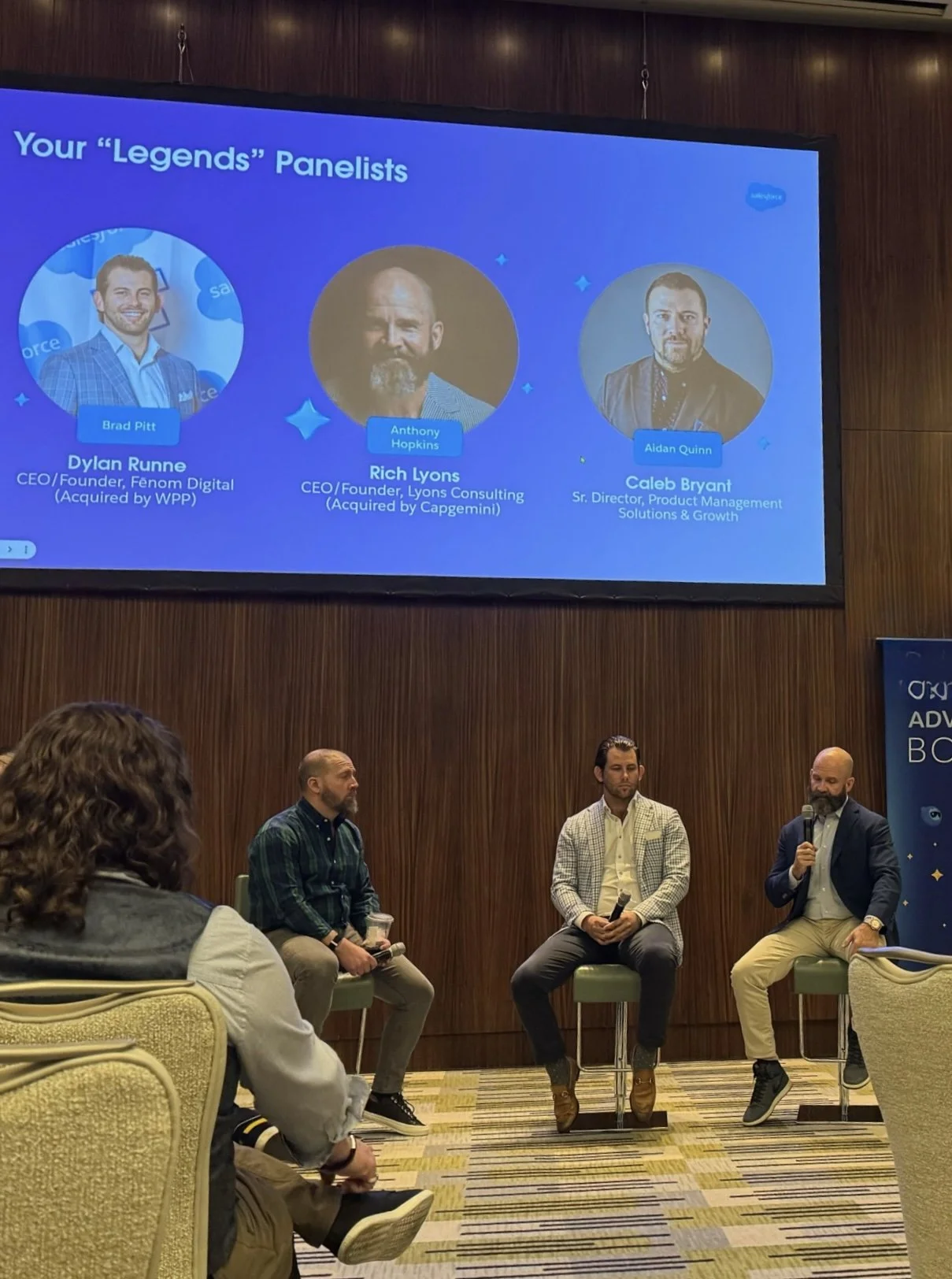
One of the clearest takeaways for me—reinforced during my time on the Salesforce partner advisory board panel—is that the value of people hasn’t changed. Technology continues to evolve and undoubtedly makes us more efficient, but it doesn’t replace the importance of relationships, collaboration, and shared goals.
If I had to sum up this year’s Shoptalk, it would be this: AI is accelerating the pace of change, but it’s also forcing a return to fundamentals. Strong leadership, clear thinking, and authentic relationships are becoming more—not less—important. The tools will continue to improve, but what ultimately drives meaningful outcomes hasn’t changed. It still comes down to people, how you lead them, and the relationships you build along the way.
For more thoughts and insights, sign up for my newsletter to get The Rich Minute delivered to your inbox each month!
My book, Life Is Sales, is out now! Grab a copy and embrace the LIS philosophy to maximize your potential.